Preparing for your OET Speaking test day can feel stressful—especially when you’re not sure what will happen on test day. This guide breaks everything down clearly so you can walk into your speaking test confident, calm, and fully prepared.
Whether you’re a nurse, doctor, or allied health professional, this checklist will help you avoid common mistakes and focus on what really matters: your speaking performance.
✅ What Is the OET Speaking Test Day Preparation?
The OET Speaking sub-test:
- Is taken one-to-one with an interlocutor
- Takes about 20 minutes
- Includes:
- A short warm-up (not assessed)
- Two role plays based on your profession
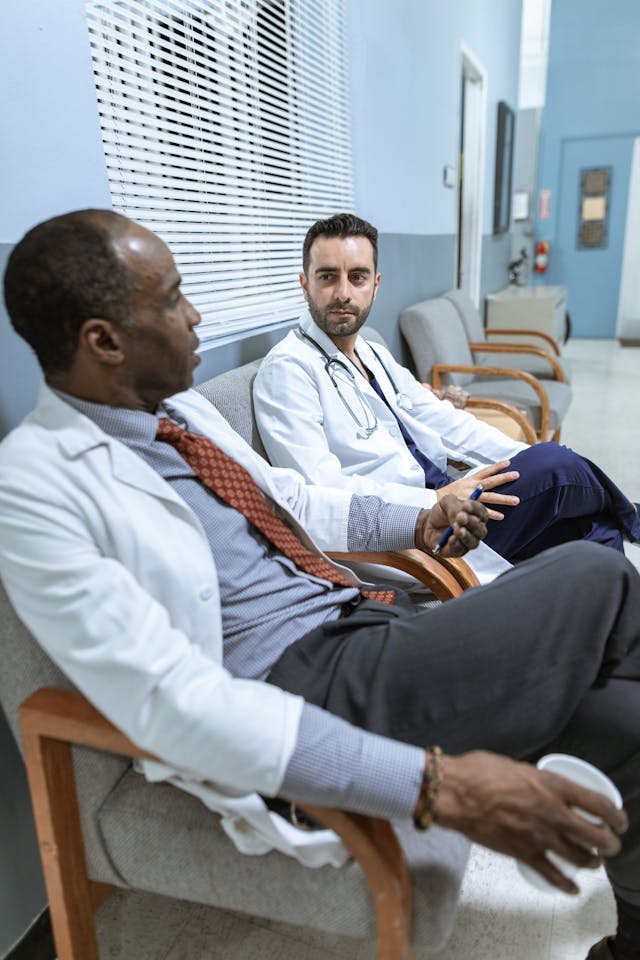
👉 Tip: The warm-up is just to relax you—don’t overthink it.
What this means for you:
The OET Speaking sub-test mirrors real clinical communication. You’ll interact with a trained interlocutor who plays the patient (or carer). The warm-up is simply to help you relax—your performance is assessed in the two role plays that follow. Each role play gives you 3 minutes to prepare and around 5 minutes to speak, so structure and time management matter. Because scenarios are profession-specific, nurses, doctors, and allied health professionals are assessed on communication that reflects their real workplace interactions. This practical focus is why the OET Speaking test day is highly regarded by regulators.
Where to Sit the on your OET Speaking Test Day
Precise summary (bullets):
- Quiet, well-lit, indoor room
- No people or pets can enter
- Clear desk (no notes, books, phones)
- Computer placed on a table/desk


Why your environment matters:
Because the test is proctored online, your room becomes the “exam hall.” The interlocutor will visually check your space and can ask you to remove items or rearrange your setup. If someone enters the room during your test—even briefly—your session can be stopped and your results withheld. Choose a room where interruptions are impossible, close doors and windows to reduce noise, and remove anything that could be considered a prompt or aid. Lighting is also critical: your face must be clearly visible so the interlocutor can verify your identity and observe communication cues.
Your desk must be:
- Clear and tidy
- With your computer placed on a table (not your lap)
❌ Sitting on a bed, couch, or in a dark or cluttered room can cancel your test.


What to Have Ready (and What NOT to Bring) on Your OET Speaking Test Day
Precise summary (bullets):
- Bring: valid ID, computer/tablet with webcam, stable internet
- Bring: blank paper + pen, clear water bottle (no label), mirror
- Don’t bring: phone, watch, headphones, bags, notes
How to prepare the night before:
Lay out everything you’ll need at least 24 hours in advance. Your ID must match the one used during booking; mismatches can prevent you from sitting the test. The mirror (medium to large) is used during the 360° environment check to reflect your keyboard and screen. The water bottle must be clear and label-free—even small labels can cause delays. Removing prohibited items in advance saves time and reduces anxiety on test day.
Must-have – have them ready before the OET speaking test day:
- ✔ Valid ID (same one used during booking)
- ✔ Laptop / desktop / tablet with webcam
- ✔ Stable internet connection
- ✔ Blank paper + pen
- ✔ Clear plastic water bottle (no label)
- ✔ Medium-to-large mirror (for environment check)
Do NOT bring:
- ❌ Mobile phone
- ❌ Headphones or earphones
- ❌ Watches
- ❌ Bags
- ❌ Notes or dictionaries
System & Internet Requirements (Do This Early)
Precise summary (bullets):
- Device with webcam, mic, speakers
- No dual monitors or phones
- Internet speed ≥ 0.6 mbps
- Prefer wired (ethernet) connection
Why tech checks are non-negotiable:
Technical issues are one of the most common causes of stress on test day. Even if your English is excellent, poor audio or unstable internet can disrupt your flow and cost you time. Test your microphone volume, camera angle, and internet stability in the exact room you’ll use. If possible, connect your device directly to your router with an ethernet cable for the most stable connection. Close background apps and browser tabs to prevent bandwidth drops.
Before test day, make sure:
- Your device has:
- Webcam
- Microphone & speakers
- Your internet speed is at least 0.6 mbps
- You are NOT using dual monitors
👉 Best setup: laptop or desktop connected directly to the router using an ethernet cable.
Before The OET Test Day: Your 72-Hour Checklist
Precise summary (bullets):
- Install Zoom
- Create Zoom account (same email as OET)
- Test audio/video at zoom.us/test
How to avoid last-minute panic:
Don’t wait until test day to install software. Installing Zoom and testing your setup several days earlier gives you time to troubleshoot. Use the same email address you used for your OET booking to avoid login issues. When you run a test meeting, check that your voice is clear, your camera frame shows your face and shoulders, and your background is tidy. Consider doing a short mock role play on Zoom with a friend to get comfortable speaking into the camera.
👉 Do this at least 2–3 days before your exam.
🛡️ What Happens on The OET Test Day?
You will go through 3 security checks (page 6 Speaking-Test-Online-User-Guide):
1️⃣ 360° Environment Check
You show your room, desk, screen, and keyboard using your webcam.
(You’ll use the mirror to show hidden areas.)
2️⃣ ID Confirmation
Your interlocutor verifies your ID and takes a photo on the OET speaking test day.
3️⃣ Person Check
You’ll show:
- Sleeves
- Pockets
- Ankles
- Glasses (if worn)
What to expect in practice:
You’ll wait in a virtual lobby until the interlocutor lets you in. Then you’ll complete three security checks. The 360° scan ensures your environment meets rules; the ID check confirms your identity; and the person check ensures you’re not wearing prohibited items or devices. Remove jewellery, empty pockets, and pull back long hair before joining the call to speed things up. These checks are standard and designed to protect test integrity—not to intimidate you.
💡 Tip from the guide: Remove jewellery and empty pockets before starting.
🌐 What If My Internet Drops on My OET Speaking Test Day?
If your connection drops:
- Rejoin using the Zoom link
- The environment check will be repeated
- If the connection keeps failing, you may need to rebook the test
👉 Always have a backup internet option (e.g. hotspot ready but not active unless needed).
How to prepare a backup plan:
Internet issues happen. If your connection drops, rejoin immediately using the same link. Be ready to repeat the environment check—this is normal procedure. If your internet continues to fail and interrupts the role play, you may be advised to rebook with a more stable connection. To reduce risk, ask others in your household not to stream or download during your test, and keep a mobile hotspot ready (but not active) as a last resort. This must be done prior to your OET test day
How to maximise your score:
The OET Speaking criteria reward clarity, rapport, structure, and reassurance. Start each role play by acknowledging the patient’s concern, then provide clear information in short chunks. Offer a simple plan and check understanding at the end (“Does that make sense?”). If you make a small grammar mistake, don’t stop—self-correct naturally and continue. Eye contact with the camera, calm pacing, and a supportive tone go a long way in demonstrating professional communication.
🎯 Final Speaking Test Day Tips (From Experience)
- Log in 15 minutes early
- Speak clearly and calmly
- Use patient-friendly language
- Structure your answers:
- Empathy → Information → Plan → Check understanding
- Don’t panic if you make a small grammar mistake – keep going